Overcoming Isolation Through Community: LaToya’s Story at McClendon Center

“I come to McClendon Center to connect with the amazing women in the program.”

For LaToya, those words represent far more than a daily routine. They reflect a turning point.

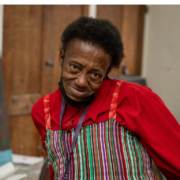
In the summer of 2024, LaToya joined McClendon Center’s Day Program after experiencing a profound period of isolation. Medically discharged and no longer able to work, she found herself spending most days alone in her apartment, disconnected from family, friends, and the sense of purpose she once knew.

At McClendon Center, LaToya found something she hadn’t realized she was missing: community.

Our Day Program — recognized as one of the most comprehensive rehabilitation programs in the District — is designed to support individuals who are experiencing isolation, mental health challenges, and disruptions to daily life. Through a combination of therapeutic services, skill-building groups, and consistent peer connection, the program offers structure, dignity, and a place to belong.

Within this environment, LaToya began rebuilding her social skills, improving her ability to focus, and receiving therapy to help address her PTSD and depression. What once felt like a closed world slowly opened, replaced by meaningful relationships and a renewed sense of connection.

Today, LaToya is more engaged, more confident, and no longer navigating her challenges alone. Her story is a powerful reminder that healing doesn’t happen in isolation — it happens in community, with the right support in place.

What Community Support Made Possible at McClendon Center in 2025

As 2025 comes to a close, we’re reflecting on a year full of connection, growth, and community at McClendon Center. Every day, we witness moments of care, resilience, and joy that remind us why our work matters. And, it wouldn’t be possible without you.

We’re excited to share a short video capturing a snapshot of 2025, including milestones and moments that showcase the spirit of our community.

From all of us at McClendon Center, thank you for being part of our journey.

Wishing you a season filled with warmth, joy, and togetherness, and a bright start to 2026.

How Octavia Found Care, Community, and Hope at McClendon Center

When Octavia first came to McClendon Center, she was facing homelessness, deep depression, and profound isolation. With consistent psychiatric care and the steady support of her Community Support Specialist, she began rebuilding her life, one step at a time.

Today, eight years later, Octavia has safe housing, ongoing treatment, and renewed hope for her future. As she often shares with us, “McClendon Center has truly been a blessing.”

Stories like Octavia’s reflect what compassionate, culturally responsive mental health care makes possible, especially during times of uncertainty.

As access to essential services continues to shrink across our city, many of the individuals and families we serve are navigating instability at every turn.

McClendon Center remains a steady, trusted lifeline because of the generosity of our community.

As we close out the year, your support helps ensure that people like Octavia continue receiving the care and stability they need to move toward healing and independence. Monthly giving, in particular, provides steady, lasting support beyond the holiday season.

Support Our Work

Isaac’s Story: Finding Clarity and Comfort at McClendon Center

Just over a year ago, Isaac became a client at McClendon Center.

Reflecting on his journey, he says the guidance he’s received from his psychiatrist has been especially impactful.

While Isaac had sought help before through other doctors and clinics, he feels that McClendon Center has given him something different: clearer direction and a stronger sense of support.

What stands out most to him is the exceptional level of care he’s received — all covered by Medicaid.

“Usually, this type of care is very expensive, or to get a good psychiatrist, you have to pay privately and handle the paperwork yourself,” he shared.

For Isaac, McClendon Center has been a steady source of comfort and connection.

“McClendon Center has provided a moment of relative comfort in my life,” he said, expressing gratitude for the social support and therapeutic care that have made a meaningful difference.

At McClendon Center, we’re honored to stand along clients like Isaac as they work toward stability, growth, and wellness — every step of the way.

Mental Illness is Not a Crime

As summer winds down, we are reminded that healing, like growth, takes time, patience, and care.

Unfortunately, recent federal actions have turned away from these truths, promoting institutionalization as a response to homelessness and mental illness.

Let’s be clear: mental illness is not a crime. Treatment should never be rooted in fear, force, or public discomfort. This harmful approach strips people of their rights and moves us further from real solutions.

At McClendon Center, we know what works. Healing happens through dignity, connection, and community-based care. Never coercion. When people are met with compassion and support, they thrive.

Together, we must continue to raise our voices and invest in what truly supports healing.

Thank you for standing with us in defending the dignity and rights of our neighbors living with mental illness. Your partnership ensures that McClendon Center remains a place of care, advocacy, and hope.

Let’s keep showing up for each other.

In solidarity,

Sheandinita Dyson
President & CEO, McClendon Center

Horticulture Therapy at McClendon Center – A Truly Special Experience

On a particular Tuesday morning in August, two groups at McClendon Center’s Day Program connected their mental health with nature through a hands-on horticulture therapy session. A pop-up plant space had transformed the room: a wire rack displayed a variety of greenery, and three tables held more than 20 potted plants.

Group A, composed of clients whose mental health challenges impact their cognitive abilities, focused on orienting themselves to the present—connecting with time and place using the plants.

The session began with horticulture therapist Kaifa Anderson-Hall gently guiding the group:

“The plants are so thirsty. You’ll need to walk around and water them. Brown leaves are a sign they’re not getting enough water,” she said as she carefully pruned some herself. “Plants need to stay hydrated just like we do—especially this time of year.”

With focus and care, clients took turns watering the plants. Kaifa affirmed their efforts with, “The plants are saying thank you.” Each plant was labeled with its name, date planted, height, and number of leaves—adding both structure and mindfulness to the session.

“Now that our plants are happy, let’s make some connections to the new month—August,” Kaifa continued. “What do we do differently with our plants in the summer?”

Clients reviewed their “Hello August” worksheet, noting seasonal changes and engaging their senses. Before the group fully dove in, Sam, a client, entered excitedly with handcrafted pots adorned with colorful gems—intended to hold plants sold at the upcoming Art of Transformation fundraiser. Kaifa explained that Sam is not only a gifted artist but also the “grandfather” of the original McClendon Center spider plant. His contributions—propagated pups from that plant—symbolize the full-circle healing found through horticulture therapy.

The group continued with a true/false question: “August is the last full month of summer.” Then: “Which flowers bloom in August—tulips or sunflowers?”

“Tulips are for spring,” Kaifa explained, showing a picture. “Sunflowers are what we’re seeing now. Some grow as tall as we are. I’ll bring some in for you to see.”

Next came a discussion on August fruits: Which ones are most eaten—bananas, strawberries, apples, watermelon, or peaches? Ms. R chose watermelon, her face lighting up as she recalled her father buying them in the summer.

“We used to tear them up,” she laughed, evoking memories that grounded her in time and place.

Kaifa shared a brief history of the watermelon—first cultivated in the wild of Africa, even depicted in Egyptian tombs—drawing historical and cultural connection to the experience.

The conversation shifted to favorite August activities: cookouts, the beach, gardening, concerts. Rajon exclaimed, “The beach! We used to go to Rehoboth.” Most picked cookouts, citing BBQ chicken and family gatherings as highlights.

Kaifa noted the National Arboretum, just a few miles from the Center, as a space filled with trees, flowers, and music—showing how plant therapy can expand from classroom to real-world exploration.

To close the session, clients celebrated notable August birthdays. Michael Jackson’s “Man in the Mirror” played as they colored their worksheets. Janice, the only client in Group A with an individual plant, stayed afterward to add fresh soil.

As Group B arrived, each client reached for their own plant. What stood out was the deep sense of nurture and care they expressed—plants reflecting their own emotional landscapes.

Mohammad lit up as he checked on his Pothos plant, which had grown to 72 leaves and produced multiple cuttings. He had once hoped to bring the plant home to his group residence for autonomy, but when that wasn’t permitted, he brought it back to the day program.

“Where’s the Peace Lily?” he asked.

Kaifa brought it forward.

“Your spirit knew this plant needed you,” she told him. “It’s been two weeks since watering, and the yellow leaves are telling us she’s thirsty.”

Using pronouns for the plants fostered a sense of compassion and relationship.

“Plants lose leaves and grow new ones. That’s their cycle,” she reminded the group. “We shouldn’t be devastated—we grow through it.”

Ms. A shared that her once-bare stem plant, propped up with a bobby pin, had finally sprouted leaves.

“When we experiment, we open ourselves to growth,” Kaifa reflected. “Sometimes, holding on just a bit longer lets the plant—and us—show resilience.”

A client then asked about seeing roots grow in clear pots, sparking a lesson on hydroponics—growing plants in water.

“Root systems are fascinating!” Kaifa said, explaining how some hydroponic systems use fish tank waste as fertilizer.

The analogy came full circle:

“Our ‘roots’ are the people and places we come from. If our roots aren’t healthy—if they’re blocked or cut off—we can begin to decline. Roots sustain us, even when we can’t see them.”

The lesson’s central theme was clear:

Water. Prune. Donate cuttings. Propagate for new growth. Allow others to adopt and nurture.

It’s a practice in self-care and community—a healing process rooted in nature, supported by compassionate programming, and made possible through the generosity of partners who believe in mental health that blooms.

Experience the Art of Transformation – September 18

Art of Transformation 2025

Thursday, September 18, 2025
6:00-8:00 pm
📍 True Reformer Building

Join us on Thursday, September 18, from 6:00 to 8:00 PM at the historic True Reformer Building (1200 U Street NW, Washington, DC) — a cultural landmark and a powerful setting for an evening centered on mental health, community, and resilience.

🖼️ Highlights include:

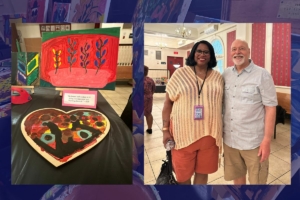
– 50+ original artworks created by McClendon Center clients
– A special performance by our Dance/Movement Therapy participants
– A vibrant gathering of advocates, supporters, and community members

🎟️ Tickets are $125 and include light appetizers, drinks, and an immersive experience highlighting McClendon Center’s impact.

Proceeds from ticket and art sales directly support our mission to improve the health and well-being of DC residents living with mental health challenges.

Celebrate transformation. Support healing. Join us.

A Safe Space to Belong: Inside McClendon Center’s New Pride Group

At McClendon Center, a sense of belonging is woven into everything we do. That spirit is alive and thriving in our newly formed Pride group—a safe and welcoming space where clients can ask questions, share stories, and engage in meaningful dialogue without fear of judgment.

In just four weeks, this group of eight members has built something powerful: a circle rooted in inclusion, openness, and shared humanity. During a recent session, LaToya proudly presented a flag she carried in the World Pride Parade. Robin sparked conversation with a smile, saying, “Just the word gay means happy—so how can you be mad at that?”

With the guidance of two skilled facilitators, the group focuses on fostering understanding. Members are reminded of their collective purpose: to create a space where learning happens through respectful discussion and vulnerability. As one facilitator put it, “When you go left, we’ll guide you back—to help reframe those thoughts.”

When clients shared stereotypical beliefs, the facilitators responded with gentle curiosity, encouraging reflection with questions like, “What else could be true?” One discussion challenged the notion that romantic relationships must only exist between a man and a woman. The group embraced statements like “Love is love,” “Sexuality and gender are different,” and “Giving compliments isn’t inherently feminine—you’re not less of a man for complimenting another man.”

A woman in her 60s shared how she had long known her sister was gay, even though her sister had married and raised children. She joined the group to better understand others’ experiences and later revealed that she herself had once questioned her own sexuality. Her story illustrated the courage it takes to explore and accept one’s identity at any stage of life.

True to McClendon Center’s mission, the group also addressed mental health—particularly within the LGBTQIA+ community. Members discussed how transgender individuals face the highest suicide rates, compounded by the societal message that their identities are invalid or “wrong.” As one member reflected, “It’s like the world is saying you don’t exist.”

The topic of workplace pride and DEI (diversity, equity, and inclusion) sparked additional conversation. Some members voiced concern over reports of bans on DEI-related hiring practices. While some advocated for merit-based systems, others emphasized that marginalized communities still need protection from systemic discrimination.

The session closed with reflections on how sexuality—whether one’s own or that of a loved one—shapes how we navigate the world. One client shared, “I don’t wear it on my sleeve. I don’t walk around saying I’m gay. When I’m on a personal level with someone, then I’ll share.”

For this predominantly Black group, members also discussed how stigma surrounding sexuality persists in the Black community. Still, the overarching message was one of strength and self-assurance: what matters most is being confident in who you are.

©2025 McClendon Center, Inc., a tax-exempt charitable organization under Section 501(c)(3) of the Internal Revenue Code. All rights reserved. Privacy Policy